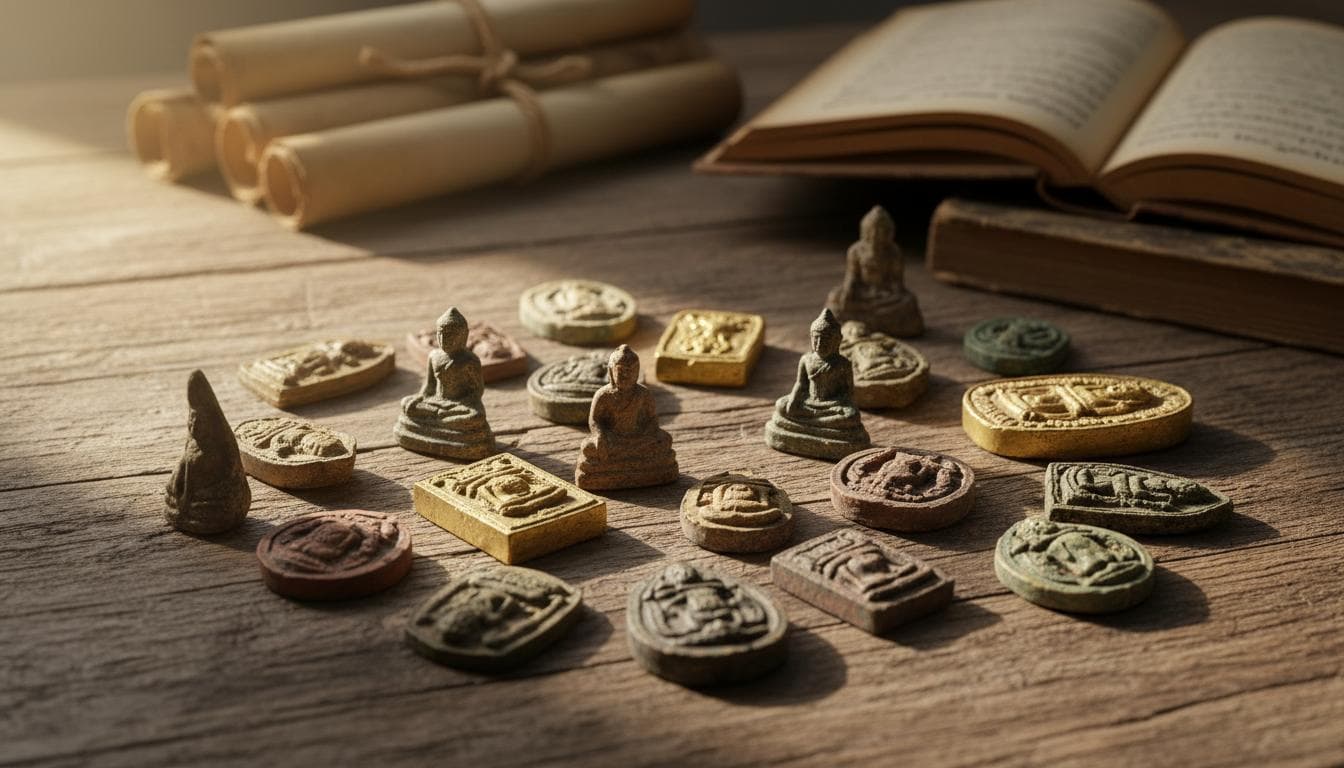
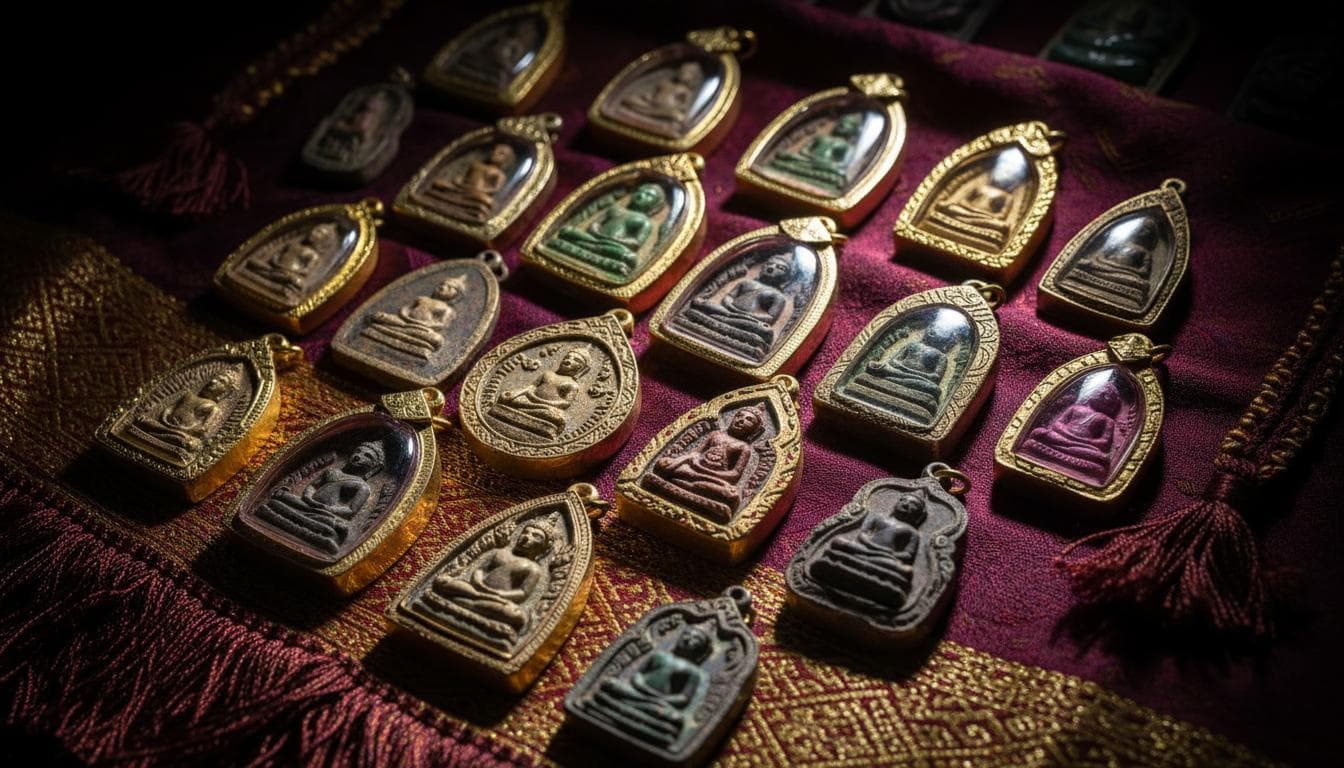
The Lanna Amulet Tradition: Northern Thailand's Distinct Sacred Arts
How the ancient Lanna kingdom developed its own distinctive amulet styles, scripts, and master-monk lineages separate from central Thailand.

A Kingdom Apart
The Lanna Kingdom (roughly 1292–1775 CE) occupied what is now northern Thailand — Chiang Mai, Chiang Rai, Lampang, Lamphun, and surrounding provinces. For much of its history, Lanna was politically and culturally distinct from the kingdoms of central Thailand, developing its own language, script, artistic traditions, and Buddhist practices.
This distinctiveness is fully reflected in Lanna's amulet tradition, which remains recognizable and valued as a separate category by informed collectors.
The Lanna Script
The most immediately recognizable feature of Lanna amulets is the inscriptional script — "Tua Mueang" (Northern Thai script) or related historical variants. Where central Thai amulets use Khom script (Khmer-derived), Lanna pieces use a completely different writing system descended from Mon script via the Khmer-influenced writing of the region.
This script difference is an immediate authentication marker: a claimed "Lanna" piece inscribed in Khom is immediately suspect.
Distinctive Artistic Style
Lanna Buddhist art developed under different influences than central Thailand:
- Strong Burmese influence (particularly Shan State) in later periods
- Older Mon-period aesthetic inheritance
- Chinese influence through Yunnan trade connections
- Sri Lankan Theravada influence through a separate ordination lineage
The resulting Buddha image style features characteristic differences from central Thai representations: different robe configurations, distinctive hand positions, and facial features that reflect the northern aesthetic.
Key Lanna Master Monks
**Kruba Srivichai (1878–1938)** — the defining figure of modern Lanna Buddhism (see dedicated article). His amulets are the most collected in the northern category.
**Kruba Bunchum Yanasangvaro** — a contemporary master who follows Kruba Srivichai's model of temple-building service. His amulets attract a large following.
**Luang Pu Waen Sujinno (1887–1985)** — a forest master of Chiang Rai province whose amulets reflect the austere forest tradition within a Lanna context. His pieces are among the most valuable in the northern market.
**Luang Pu Sim Buddhacaro (1909–1992)** — Chiang Rai forest monk whose distinctive sitting-monk image amulets are widely recognized.
Lanna Temple Centers
Chiang Mai's temple network forms the center of Lanna amulet production:
- Wat Chedi Luang — the ancient temple whose ruined chedi once housed the Emerald Buddha
- Wat Suan Dok — site of the sacred relic whose companion was enshrined at Doi Suthep
- Wat Phra Singh — containing the revered Phra Singh image, a pinnacle of Lanna Buddhist art
- Wat Lampang Luang — (Lampang) — one of the best-preserved Lanna-period temple complexes
Collecting Lanna Amulets
For collectors, the Lanna tradition offers:
- A completely distinct aesthetic system with its own authentication markers
- Rich historical documentation through Lanna chronicles (tamnan)
- A collector community centered in Chiang Mai with its own expertise
- Pieces that are less known internationally than Bangkok-centered tradition — representing potential value for informed buyers
Learning the Lanna script and familiarizing oneself with the northern Buddhist aesthetic is the essential foundation for serious engagement with this rich sub-tradition. Panya's regional collection filters and Lanna-specialist community make it a natural home base for collectors focused on northern Thai amulets.