Monk Coins: History, Types, and How to Collect Them
Thai monk coins — medallions bearing a revered master's image — are one of the most accessible and popular entry points into amulet collecting.

What Are Monk Coins?
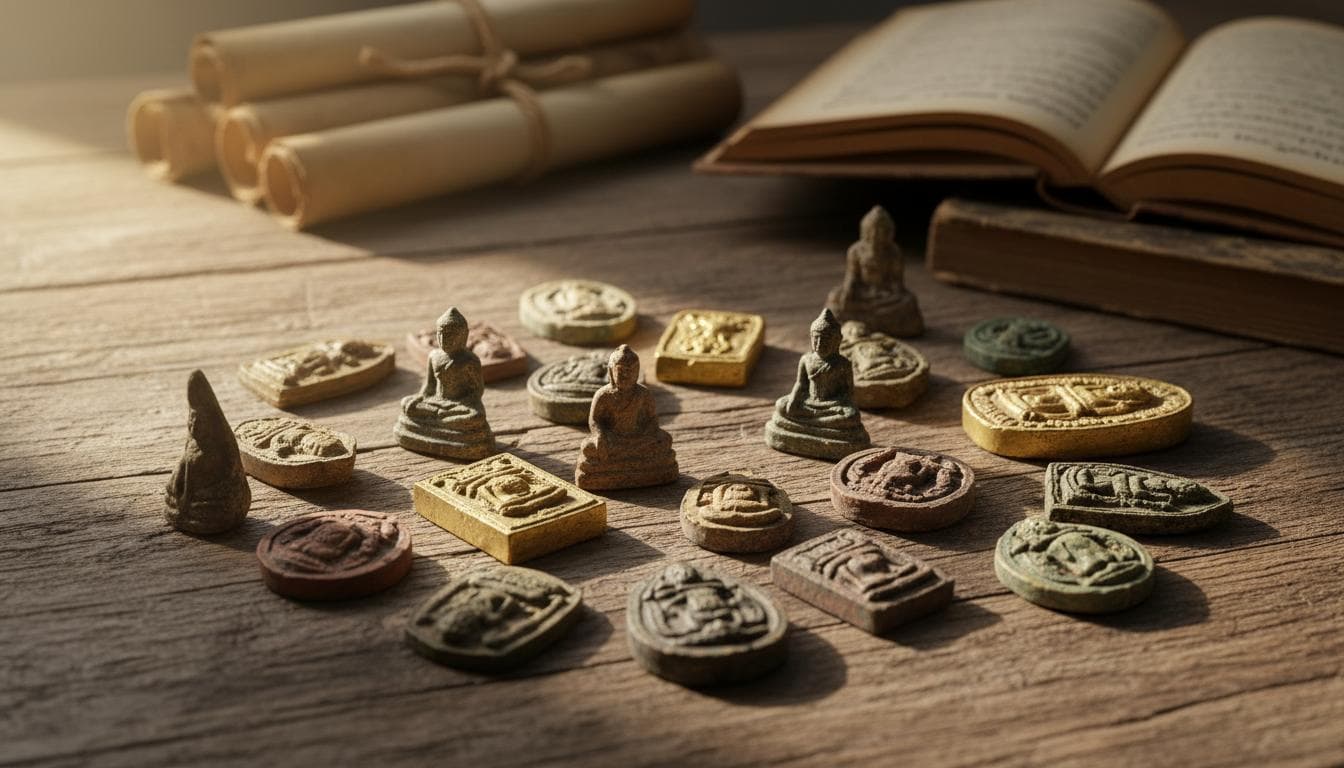
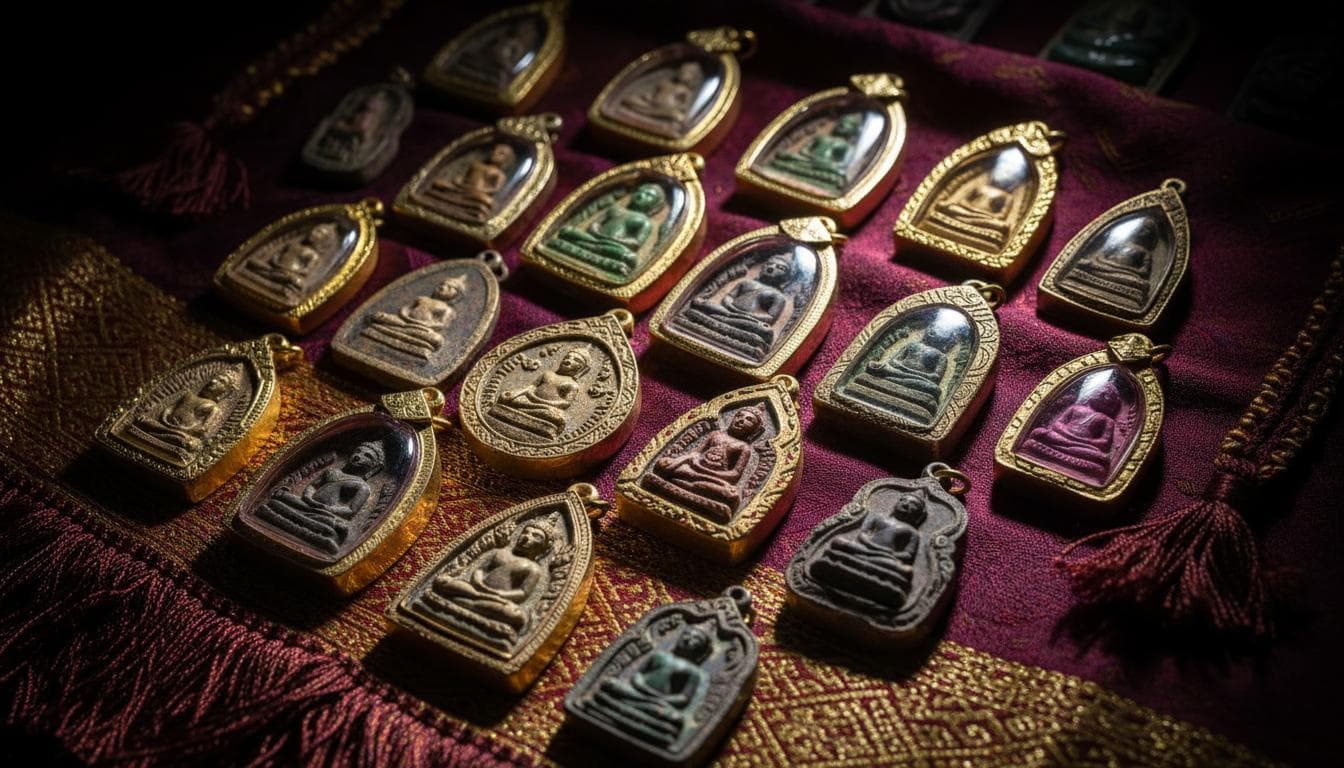
Among the most recognizable forms of Thai amulets are "monk coins" — circular or oval metal medallions bearing the image of a revered monk on the front, typically with sacred inscriptions on the reverse. Unlike the pressed-powder tablets of classical amulet tradition, monk coins are cast or stamped in metal and feel more like actual coins in the hand.
Historical Origins
The earliest Thai monk coins emerged in the late 19th century, influenced partly by the medallion traditions imported from Western contact during Thailand's modernization era. Temples began issuing portrait medallions to commemorate significant monks and raise funds, creating a hybrid form that combined Buddhist sacred object tradition with medal-making technology.
Early adopters included temples in Bangkok's royal network, where connections to royalty made commemorative medallions a natural extension of existing portrait traditions.
Key Characteristics
**Front (Obverse):**
- Portrait of the monk — typically bust view in robes, facing front
- Monk's name and title in Thai script
- Temple name abbreviated
- Sometimes a serial number from a limited batch
**Reverse:**
- Sacred Yant (yantra diagram) — geometric pattern specific to the monk's teaching lineage
- Khom-script inscriptions of protective formulas
- Batch year and ceremonial details
- Temple seal or logo
**Materials:**
- Standard: alpaca (silver-colored base metal), copper, brass
- Premium: silver, gold, or gold-plated versions
- Special: "namun" or sacred alloy versions incorporating ceremonial metals
Most Collected Monk Coin Categories
**Luang Phor Thuad (Wat Chang Hai)** — perhaps the single most widely produced monk coin category, with dozens of batches across decades. Early editions are highly valuable.
**Luang Phor Koon (Wat Ban Rai)** — the beloved monk from Nakhon Ratchasima whose coins became enormously popular in the 1990s-2000s. His smiling image and association with prosperity made him one of the most recognizable.
**Luang Phor Pae (Wat Pikulthong)** — Saraburi province master whose coins are prized in central Thailand.
**Kruba Srivichai** — commemorative coins produced after his death are among the most sought-after in the northern Thailand market.
Grading and Condition
Like traditional coins, monk coins are graded on condition:
- Mint/Uncirculated: — Never worn, original luster preserved
- Extra Fine: — Minimal wear, high relief details sharp
- Very Fine: — Light wear on high points, full detail visible
- Fine: — Moderate wear but major design elements clear
- Good: — Significant wear, design discernible but details lost
For high-value pieces, original condition and original casing (if cased) add significantly to value.
Getting Started with Monk Coins
Monk coins make an excellent entry point for new collectors because:
- A wide range of pieces are available at modest prices
- Their metal construction makes them more durable than powder amulets
- Authentication, while still important, is somewhat more straightforward than for powder pieces
- Provenance documentation in the form of original temple certificates is more commonly available
Starting with coins from temples you can physically visit — buying directly from the source — builds a foundation of genuinely authenticated pieces from which to expand your collection. Use Panya to photograph and catalog each monk coin as you acquire it, building a digital record that complements the physical certificates.