Amulet Casing and Display: Tradition, Material, and Meaning
Understanding the artistry and spiritual significance of the gold and silver cases that protect Thailand's sacred amulets.

The Art of the Case
In Thai amulet culture, the case (locket) that houses an amulet is far more than protective packaging. It is an aesthetic statement, a reflection of the owner's reverence and resources, and sometimes an additional layer of sacred craft in its own right.
Why Amulets Are Cased
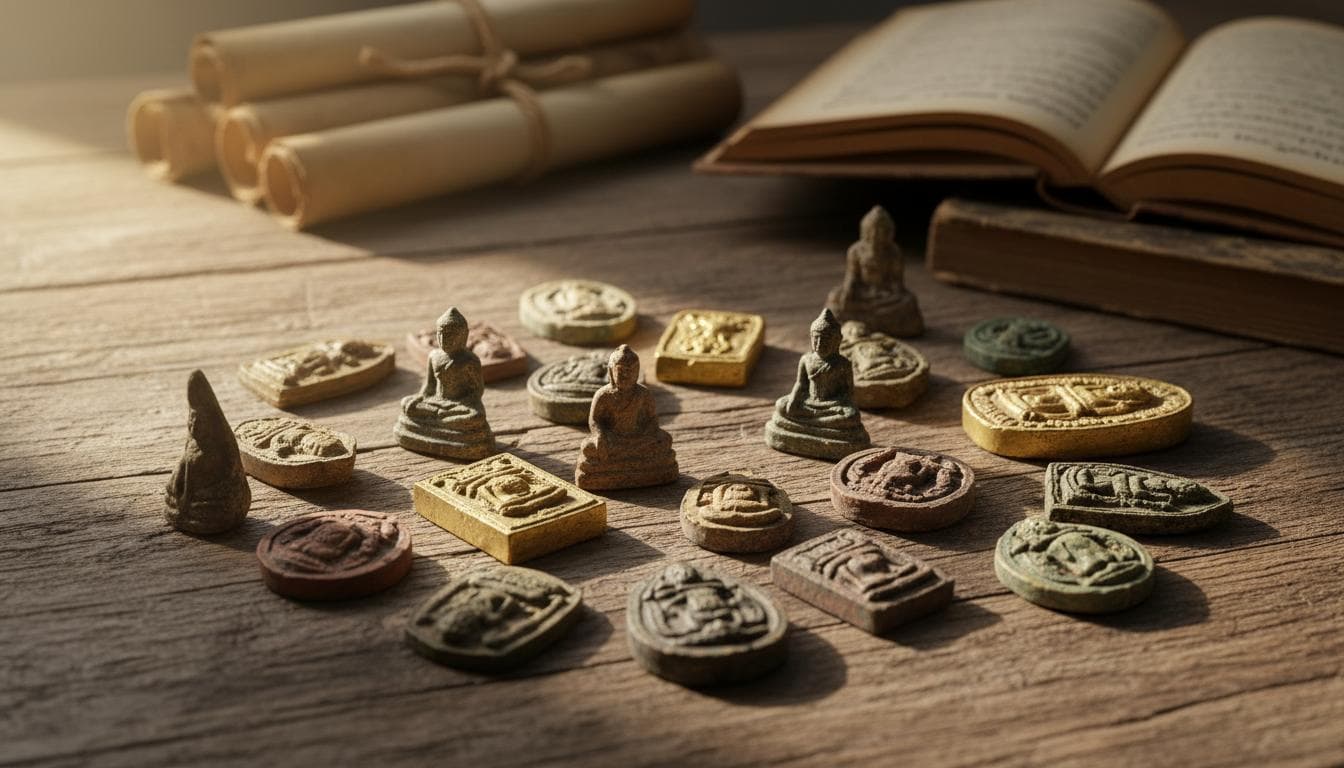
Fragile powder amulets — pressed from clay, ash, and organic materials — can crumble over time if unprotected. Metal and organic amulets can tarnish or be damaged. Casing serves practical preservation purposes while also:
- Making the amulet wearable as jewelry
- Displaying the amulet attractively
- Potentially adding the goldsmith's own sacred art through back panel designs
- Signaling the owner's level of devotion and investment
Materials and Their Significance
**Gold (Thong):**
The most prestigious casing material. A gold case signals that the owner holds the enclosed amulet in the highest esteem. Gold's association with royalty, purity, and enduring value makes it the traditional choice for extremely valuable or personally significant amulets.
**Silver (Ngern):**
A step below gold in prestige but carrying its own associations with clarity, lunar energy, and protective cooling qualities. Silver cases are common for amulets associated with white-robed monks or pure meditation lineages.
**Stainless Steel:**
A modern option that provides durability and clean presentation at lower cost. Widely used for everyday-worn pieces.
**Alpaca/White Metal:**
The most common budget option. Silver-colored base metal used for accessible pieces.
Casing Styles
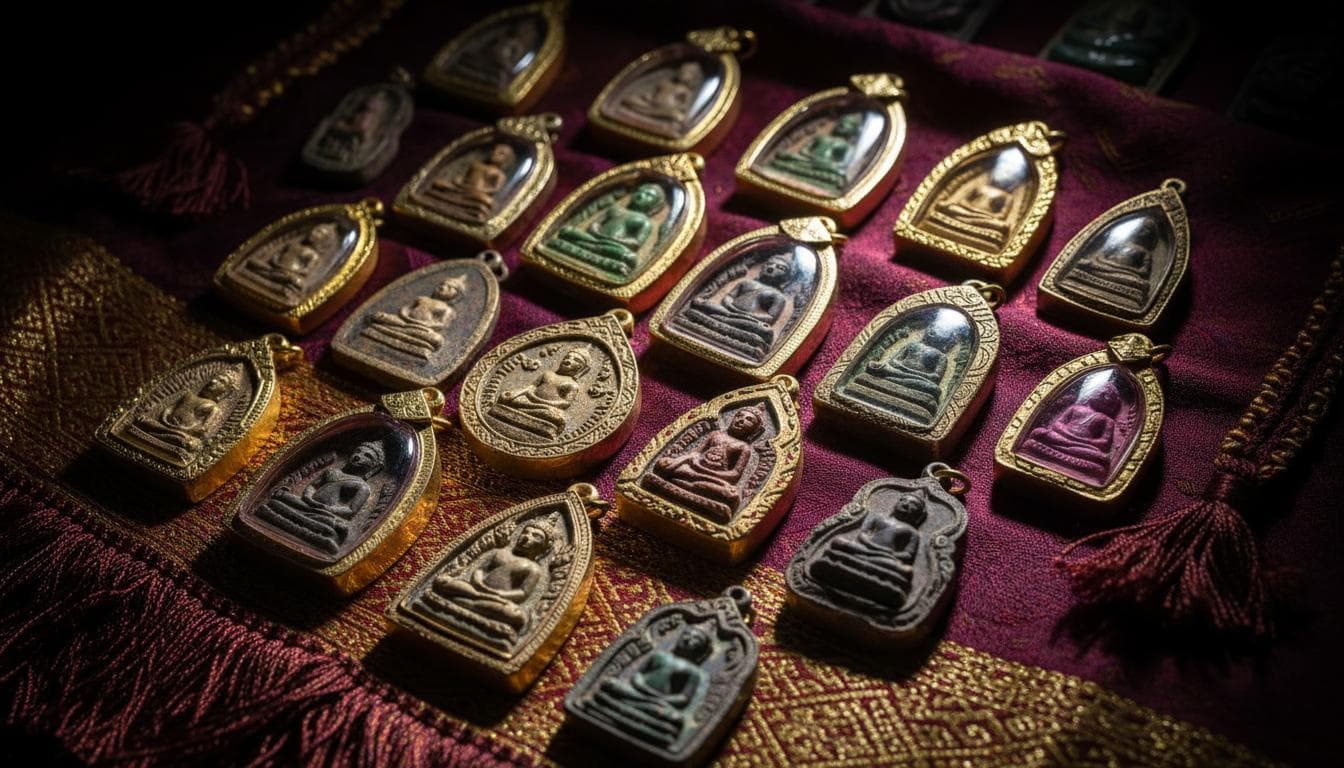
**Open-face (หน้าเปิด):** A frame that exposes the amulet's face to direct view and touch, allowing the faithful to make direct contact. Traditional and preferred by devotees who regularly touch or press the amulet to their foreheads in respect.
**Closed-face (หน้าปิด):** A sealed case with a transparent front (glass or crystal) that fully protects the amulet. Required for fragile powder pieces and preferred for valuable antiques where physical contact could cause wear.
**Tubular (กล้อง):** For Takrut scrolls and other cylindrical amulets, a tubular case of gold, silver, or metal.
The Goldsmith's Craft
Bangkok and provincial centers have specialty goldsmiths who do nothing but create amulet cases. Their skill lies in:
- Precisely fitting each case to its specific amulet
- Creating decorative frames that complement the amulet without overwhelming it
- Designing back panels with Yant patterns that add protective function
- Selecting appropriate finishes (polished, brushed, antique) for each piece
Renowned goldsmiths develop their own followings among serious collectors, and a case by a master craftsman adds both aesthetic and monetary value to a collection.
Display Beyond Wearing
Collectors with large collections face the pleasant challenge of display. Options include:
- Individual shadow boxes — each piece in its own framed display with documentation
- Velvet display trays — professional-style presentation for table or cabinet display
- Custom cabinets — purpose-built storage and display furniture
- Digital cataloging — apps that maintain photographic records supplementing physical display
Regardless of display method, amulets should always be kept elevated — never stored below waist level, which is considered disrespectful in Thai Buddhist tradition. Panya's digital catalog complements physical display by giving every piece in your collection a permanent photographic and provenance record.